

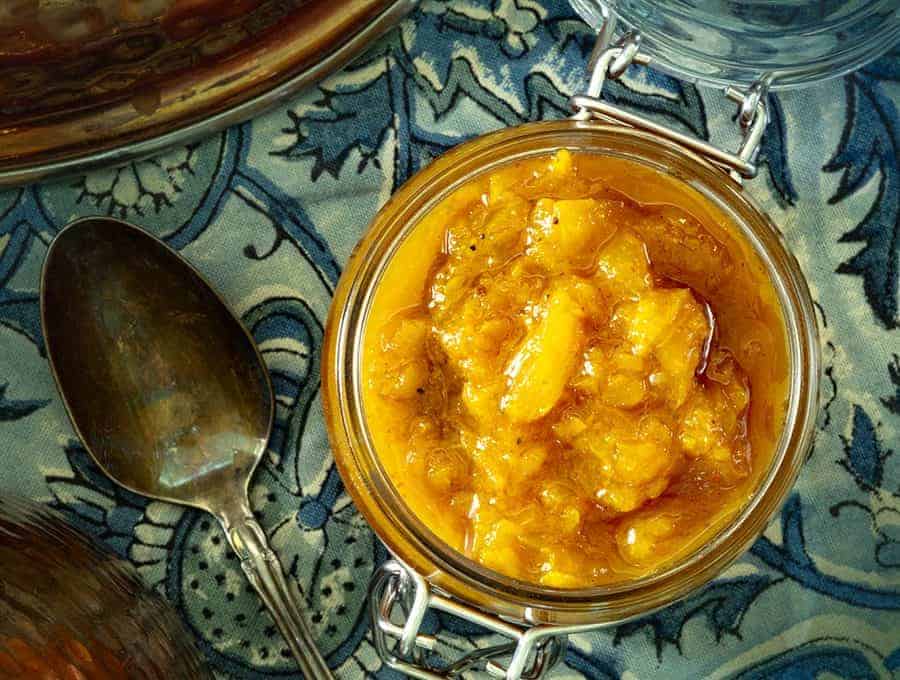
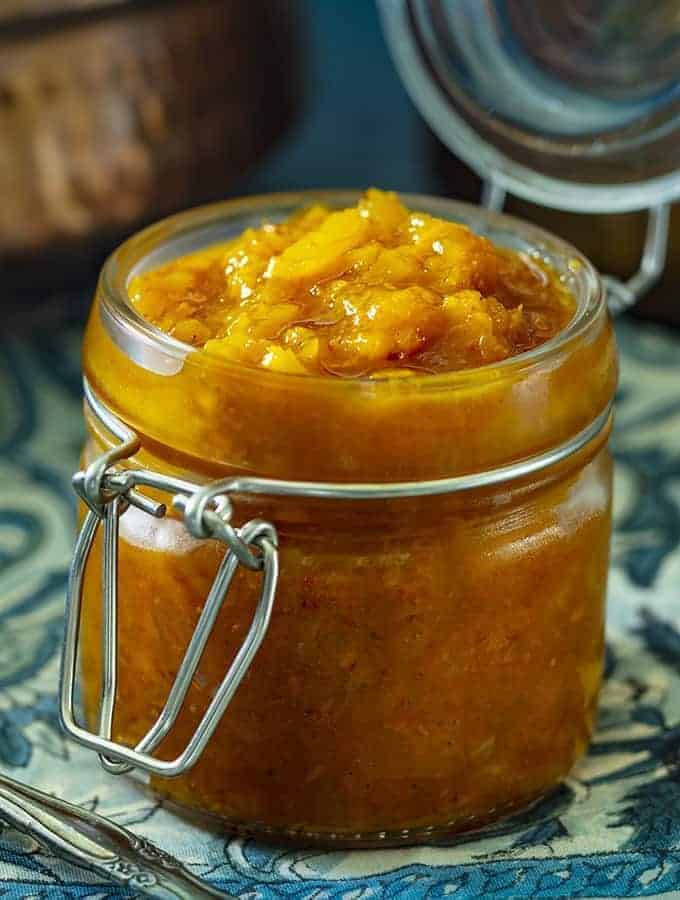
This Peach Chutney is so good that you’re going to want to put it on everything! This delightful medley of peaches and spices is also vegan friendly and easily made keto!
Why I Love This Peach Chutney
- Easy. Toss the ingredients in your slow cooker or Instant Pot and come back to a tasty treat a few hours later.
- Versatile. Enjoy it in a multitude of ways to amp up some of your favorite dishes.
- Delicious. It’s absolutely packed with flavor that the whole family will love.
You’re going to want to put this Peach Chutney on almost everything! Just #trustUrvashi on this, this is going to be your new favorite spread, or at least make it into your top ten. It’s crazy delicious, vegan, and keto-friendly, and it’s real easy to make.
This recipe is made easy thanks to your handy, old reliable slow cooker. You’re looking at maybe 5 minutes of prep time, and then you just dump the ingredients into the slow cooker and let it do all the work.
Four to six hours later (depending on whether you cook it on low or high) and you’ve got yourself a sweet chutney that you can use as either a spread, sauce, or as a way to spice up a dish!
Where Can I Use Chutney?
If you weren’t raised eating chutney on a fairly regular basis like I was, you may be a little unsure as to where you’ll be able to use this Peach Chutney. Here’s just a small list of where you can enjoy this tangy-sweet goodness:
- You can use it as a spread for a sandwich, crackers, or just about anywhere else you’d see yourself using a spread.
- You can serve it with a deli platter.
- You can mix it with other dishes like salsa or yogurt in order to make a delightful dip.
- You can use it as a dip for fried (or air-fried) foods.
- You can add it to some ground meat or cover meat in it before cooking it in order to infuse it with flavor.
- You can top a cheeseburger or add it to a grilled cheese sandwich to add some pizzazz to the dish.
- I also love this chutney over a brick of cream cheese, served with crackers or celery sticks.
- You can also use this in a ham sandwich. Butter two slices of bread, add a smear of chutney, and then add sliced ham and chunks of brie. Deliciousness!
- You can also put this on top of this Air Fried Phyllo Brie recipe .
Really, the possibilities are endless. If in doubt, just try it out!
What Is Peach Chutney Made Of?
- Onion - The savory flavors of onion help balance this sweet dish.
- Ginger - Adds just a hint of spice without being overpowering.
- Peaches- You can’t have peach chutney without the peaches!
- pineapple - Adds another layer of flavor to this dynamic dish.
- brown sugar - Use a swerve alternative if you’re eating low carb.
- turmeric
- garam masala - Enjoy the fresh flavors by making your own!
- Cayenne Pepper
- Dried Ginger Powder
- Kosher Salt
How To Make Peach Chutney
- Dice all the ingredients. To get an even chop, I often use either this push chopper , or this pull chopper .
- Place all ingredients in a 1.5-quart slow cooker. I tested this recipe in this slow cooker . Since they all vary so much with respect to temperatures, you may need to check yours from time to time.
- Cook on high for 4 hours, or low for 6 hours.
- Remove the lid and allow the chutney to cook for another 30 minutes, to allow some water to evaporate and thicken
Tips And Tricks For Making Peach Chutney
- I know many of you will want to know if this can be made in the Instant Pot. I would advise against it because the sugar in this could cause the chutney to stick to the bottom and give you a burn message.
- You can, of course, use the slow cook function of your instant pot. In that case, remember that LOW = Keep warm, Medium= cook on low heat, and HIGH = cook on high heat.
- The majority of the spice in this recipe is from the dried ginger powder. This flavor and heat also intensify with cooking.
- If you are spice-sensitive, you could consider two alternatives. Reduce the dried ginger Use a few slices of fresh ginger which will be less spicy but will still lend a great taste to the chutney.
- This chutney has been in my fridge for 2 weeks now and is still fantastic, so it keeps a while. If you plan to not conduct science experiments with it like I am doing, you might consider canning this with a water bath. I am not able to advise you on that because I haven’t canned in a while.
- Taste and adjust as needed since fruit can vary in its level of tartness and sweetness.
- This chutney is meant to serve as a side condiment. Each diner would get about 1 tablespoon alongside other dishes such as Instant Pot Chana Masala , Palak Paneer , and either Basmati Rice Pilau or naan.
- You really want to cook this in a slow cooker or on the stovetop. You could make this in an Instant Pot , but then you’d spend a lot of time putting it on sauté to evaporate all the water
Peach Chutney Variations
If you’ve already enjoyed this recipe as is, here are some suggestions on how to mix it up!
- Add raisins
- Replace some of the peaches with apricots
- Make the same recipe with ripe plums
Really, the options are only limited by your imagination!
Want More Sauce Recipes?
If you love chutney as much as I do, check out these other great chutney recipes!
- This spicy, sweet, and tangy Pressure Cooker Cranberry Chutney will wow your guests and make a wonderful addition to your cheese tray, besides providing an exotic flavor at your dinner table.
- This savory, toasted Dry Sesame Garlic Chutney is quintessentially Indian but can be used for a variety of dishes.
- This delicious Indian Raw Mango Onion Chutney is a mix of unripe mangoes, onions, & spices that tastes like you spent hours on it, but only takes 15 minutes!
And if you’re looking for more great slow cooker recipes, check out my Low Carb Crockpot Bourbon Chicken Recipe !
Peach Chutney | Slow Cooker Peach Chutney Recipe
Equipment
- Slow Cooker
Ingredients
- ▢ 1 cup Onion , minced
- ▢ 2 tablespoons Ginger , minced
- ▢ 2 cups peaches , diced
- ▢ 2 cups pineapple , fresh or canned
- ▢ 1/4 cup brown sugar , or use swerve for low carb / keto
- ▢ 1 teaspoon turmeric
- ▢ 1 teaspoon garam masala
- ▢ 1/2 teaspoon Cayenne Pepper
- ▢ 1/2 teaspoon Dried Ginger Powder
- ▢ 1 teaspoon Kosher Salt
Instructions
Dice all the ingredients. To get an even chop, I often use either this push chopper , or this pull chopper .
Place all ingredients in a 1.5 quart slow cooker. I tested this recipe in this slow cooker . Since they all vary so much with respect to temperatures, you may need to check yours from time to time.
Cook on high for 4 hours, or low for 6 hours.
Remove the lid and allow the chutney to cook for another 30 minutes, to allow some water to evaporate and thicken
I know many of you will want to know if this can be made in the instant pot. I would advise against it because the sugar in this could cause the chutney to stick to the bottom and give you a burn message.
You can, of course, use the slow cook function of your instant pot. In that case, remember that LOW = Keep warm, Medium= cook on low heat, and HIGH = cook on high heat.
The majority of the spice in this recipe is from the dried ginger powder. This flavor and heat also intensify with cooking.
If you are spice-sensitive, you could consider two alternatives. Reduce the dried ginger Use a few slices of fresh ginger which will be less spicy but will still lend a great taste to the chutney.
This chutney has been in my fridge for 2 weeks now and is still fantastic, so it keeps a while. If you plan to not conduct science experiments with it like I am doing, you might consider canning this with a water bath. I am not able to advise you on that because I haven’t canned in a while.
Taste and adjust as needed since fruit can vary in its level of tartness and sweetness.
This chutney is meant to serve as a side condiment. Each diner would get about 1 tablespoon alongside other dishes such as Instant Pot Chana Masala , Palak Paneer ,and either Basmati Rice Pilau or naan.
You really want to cook this in a slow cooker or on the stove top. You could make this in an Instant Pot , but then you’d spend a lot of time putting it on sauté to evaporate all the water.
A serving is about 2 teaspoons since this is a relish.
Get support & connect with our community on Facebook!
Nutrition
If you already signed up, you should have received an email with a password to give you unlimited access to our FREE Printable Library. The password is case sensitive. Enter it below and get printing!
Password:

Peach Chutney | Slow Cooker Peach Chutney Recipe
Ingredients
- 1 cup Onion minced
- 2 tablespoons Ginger minced
- 2 cups peaches diced
- 2 cups pineapple fresh or canned
- 1/4 cup brown sugar or use swerve for low carb / keto
- 1 teaspoon turmeric
- 1 teaspoon garam masala
- 1/2 teaspoon Cayenne Pepper
- 1/2 teaspoon Dried Ginger Powder
- 1 teaspoon Kosher Salt
Instructions
Dice all the ingredients. To get an even chop, I often use either this push chopper , or this pull chopper .
Place all ingredients in a 1.5 quart slow cooker. I tested this recipe in this slow cooker . Since they all vary so much with respect to temperatures, you may need to check yours from time to time.
Cook on high for 4 hours, or low for 6 hours.
Remove the lid and allow the chutney to cook for another 30 minutes, to allow some water to evaporate and thicken
I know many of you will want to know if this can be made in the instant pot. I would advise against it because the sugar in this could cause the chutney to stick to the bottom and give you a burn message.
You can, of course, use the slow cook function of your instant pot. In that case, remember that LOW = Keep warm, Medium= cook on low heat, and HIGH = cook on high heat.
The majority of the spice in this recipe is from the dried ginger powder. This flavor and heat also intensify with cooking.
If you are spice-sensitive, you could consider two alternatives. Reduce the dried ginger Use a few slices of fresh ginger which will be less spicy but will still lend a great taste to the chutney.
This chutney has been in my fridge for 2 weeks now and is still fantastic, so it keeps a while. If you plan to not conduct science experiments with it like I am doing, you might consider canning this with a water bath. I am not able to advise you on that because I haven’t canned in a while.
Taste and adjust as needed since fruit can vary in its level of tartness and sweetness.
This chutney is meant to serve as a side condiment. Each diner would get about 1 tablespoon alongside other dishes such as Instant Pot Chana Masala , Palak Paneer ,and either Basmati Rice Pilau or naan.
You really want to cook this in a slow cooker or on the stove top. You could make this in an Instant Pot , but then you’d spend a lot of time putting it on sauté to evaporate all the water.
A serving is about 2 teaspoons since this is a relish.
Peach Chutney | Slow Cooker Peach Chutney Recipe https://twosleevers.com/peach-chutney/
There are so many myths and half-truths surrounding the keto diet so I would like to debunk and discuss the most popular ones.
While I’m all for people getting their Celebrity Gossip from the internet, I really worry when people read one media article to determine what’s good for them.
As a trained scientist, I spent years conducting literature reviews and published many articles in peer-reviewed journals. I try to bring that same rigor and scrutiny to the articles I write on Keto.
I am not a physician. My doctorate is in Experimental Psychology. As such, I am a Research Scientist and rely on literature reviews of articles published in peer-reviewed journals to arrive at my conclusions. Please consult with your doctor to determine what is right for YOU.
The Most Common Keto Myths and the Truth Around Them
Don’t let an article or two you’ve read in a magazine or on the internet influence how you feel about the Keto diet before you do all of your research. Here are the 11 most common Keto myths and the truth behind them.
Myth #1: The Keto Diet is too difficult
Myth # 2: The Keto Diet Is Only For Weight Loss
The benefits of the ketogenic diet extend far beyond weight loss – they also include regulating hormone production, helping to normalize blood sugar, improving cognitive functioning, improving digestive health, and potentially even reducing the risk for certain diseases and disorders like diabetes or heart disease.
Myth #3: Keto And Low Carb Are Entirely Different Things
I acknowledge that these two diets may be somewhat different — but only with respect to whether or not they specify a per-day carb cap.
The keto diet generally requires that you stay at or below 20 grams of net carbs per day while low-carb diets simply exhort you to eat fewer carbs. Often the standard American diet (SAD) is used as a yardstick, and the average consumption of carbs is about 300 grams daily for most Americans.
As you can see, there’s a lot of room between 300 and 20 to specify what constitutes low-carb. Both keto and non-specific, low-carb diets typically emphasize consuming lower amounts of carbohydrates, similar amounts of proteins, and higher quantities of fat than are consumed in the SAD.
Myth #4:Intermittent FastingMust Occur On A Keto Diet
Intermittent fasting is encouraged during the keto diet and may help accelerate results (such as detoxification and weight loss), but it’s not a requirement to achieve or maintain ketosis.
Many people find IMF to be easier when following the keto diet because ketosis is known to kill cravings and reduce your appetite.
Myth #5: The Keto Diet Makes You Feel Tired And Sluggish
What the naysayers are referring to here is the Keto Flu. When you start the keto diet you might experience fatigue, headaches, and muscle aches.
However, these symptoms are actually a sign that the diet is working, and the body is switching from burning glucose as fuel to burning fat.
This is a profound shift for the human body that can have uncomfortable symptoms but usually, last only 3-4 weeks.
Myth #6: The Keto Diet will raise your cholesterol
The keto diet is not the Atkins diet and you will not be eating platefuls of bacon at every meal. While the majority of your diet will come from fat (60-75%) most people on keto choose to get their fat from a variety of animal and plant-based fats, so foods like avocados, nuts and healthy oils such as olive are usually in abundance.
Clinical trials have consistently found that low-carbohydrate diets not only helped individuals lose weight, but also improved their cholesterol. And one meta-analysis, cit ing 17 clinical trials, found that low-carb diets protected against major cardiovascular risk factors.
Many studies have also found that low-carbohydrate dieters had lower cholesterol than low-fat dieters after one year.
One thing to note is that a ketogenic diet does often elevate LDL cholesterol. However, LDL-C, when influenced by diet, has never been shown to have any effect on cardiovascular risk.
Large clinical trials and observational studies show a weak to nonexistent relationship between LDL and cardiovascular outcomes.
Myth #7: Keto Is Dangerous For Diabetics
The ketogenic diet is actually the most promising diet for people with Type 2 diabetes. The nutritional remedy for T2 diabetes is carbohydrate restriction in order to manage blood sugar or glycemic levels.
In a large, ongoing university-based study , 60% of patients with Type 2 diabetes reversed their diagnosis of diabetes after just one year on a ketogenic diet, and 94% of participants reduced or eliminated their need for insulin medications while improving the vast majority of cardiovascular risk factors.
Myth #8: Calories Don’t Matter
Sadly, calories do still matter for the most part on a keto diet. This is particularly for women. It is simply not possible to lose weight while eating many more calories than your body can burn.
You may be able to eat more calories on a keto diet than you could on a high carb diet, but there will still be a ceiling for weight loss.
There is some debate as to whether it’s excessive calories or excessive fat that matters. The fact is, that when following a ketogenic diet, excess calories usually come in the form of excess fat, since fat makes up 75% of your diet anyway. So it ends up being one and the same in practice, if not in physiology.
Lean people are leptin sensitive, and can eat more fat and still stay lean. Obese people are leptin insensitive. As we eat more, our metabolism doesn’t ramp up, it doesn’t burn those excess calories/fat as easily. Then we get fat.
Meanwhile, our lean cousins are stuffing their faces, having their metabolism ramp up, and still staying thin.
Hey, I never said it was fair! It just is. So we deal.
Myth #9:Eating KetoMeans I Have To Eat All The Fat Grams My Calculator Specifies
Most experts agree that we should eat only as much fat as is needed for satiety. Especially if you’re trying to lose weight. Your goal in keto is to get your body to burn stored fat. This is much harder than burning the fat you eat because your highly efficient body is going to burn the fat you eat for fuel before it starts tapping into your stored reserves.
If you consistently eat more fat than your body needs to burn for fuel, not only will you not lose fat, but you could gain some fat. The main reason fat makes up such a high proportion of keto diets is because it does not raise insulin.
If you’re hungry, fat not only satiates quickly, but it does so without raising insulin secretion.
Myth #10: Higher levels Of Ketosis Produce Better Results
Higher levels of ketones do not cause greater fat loss. Being in ketosis is much more important than the level of ketosis. As long as you’re in ketosis, you are burning fat.
Myth #11: Certain Ingredients Are Simply Not “Allowed”
Here’s my approach to keto: I completely exclude excessively high glycemic foods such as pasta, rice, potatoes, bread, flour, and sugar.
These foods are known to spike blood sugar and insulin levels for absolutely everyone. I advocate not eating sugar, not even in small quantities. Sugar causes a spike in insulin and often results in cravings for more sugar.
Other than that however, what matters is total carbohydrate load. For example, if all you ate all day was an apple, you’d likely still be in ketosis. In this situation, an apple is “allowed”. So it all comes down to not one single ingredient, but your overall intake that day.
Now you may CHOOSE to avoid certain ingredients like corn, or carrots. But realize this is a guideline and a choice, not an absolute for what’s needed to be in a ketogenic state.
I eat real food and watch macros carefully. So yes, my Almond-Carrot Cake includes carrots and I might put two low-carb corn tortillas in a pot of Chicken Tortilla Soup .
I selectively use tomatoes in my recipes and will have small amounts of raspberries and strawberries if I’m craving something sweet.
What matters to me is that the overall carb count remains low and my lifestyle is sustainable.
New to Keto?
Read this post on What to Eat On Keto To Get Started if you’re brand new to Keto and need to know the basics. It will help you understand Keto and the basics of the diet.
Don’t forget to check out my other Ketocookbooks.
Keto Instant Pot, Keto Fat Bombs, Sweets, & Treats , and Easy keto in 30 minutes.